
Understand the rescue scenario
Locate the simulated target and define what counts as a successful recovery.
Build. Program. Recover.
A full robotics mission combining assembly, navigation and a physical rescue objective.
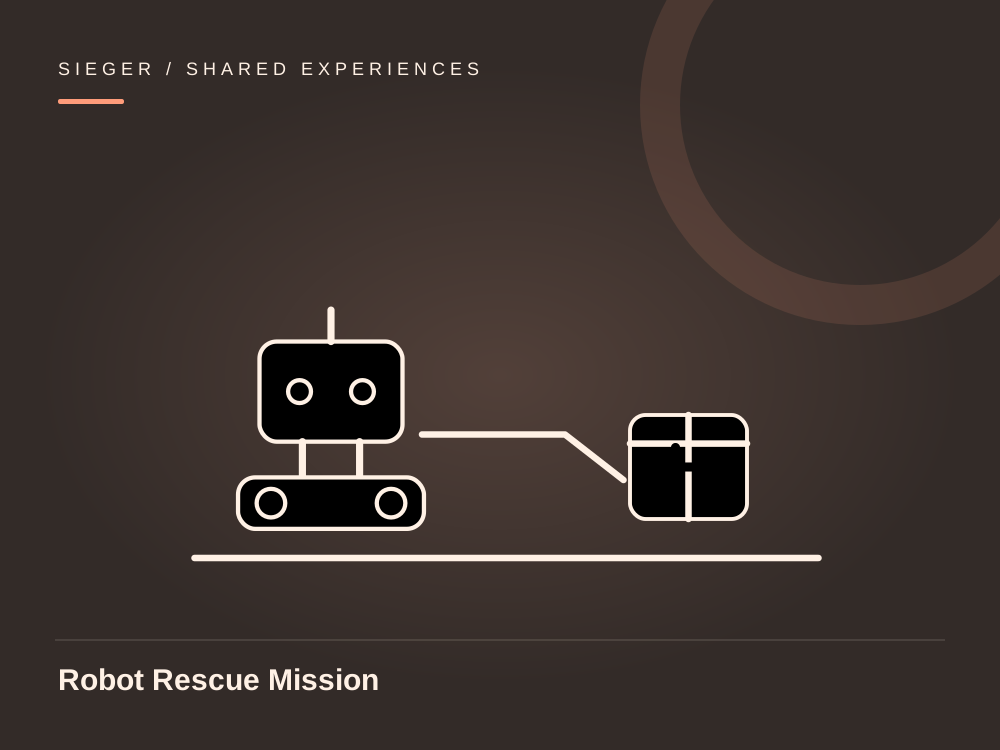
Teams must prepare a robot capable of entering a mission zone, reaching the target and retrieving or moving a simulated rescue object.
Agree the mission rules and success criteria during the briefing, then let your team choose its approach.
A practical progression from the first decision to the final demonstration.
Locate the simulated target and define what counts as a successful recovery.
Allocate responsibility for assembly, control and mission coordination.
Prepare the robot and its agreed retrieval or movement mechanism.
Try both the route and target handling before combining them.
Complete the recovery sequence and review the handoffs between team roles.
Connect assembly decisions with the needs of the recovery task.
Consider navigation and target handling as one mission.
Make responsibilities and handoffs explicit.
Trial the separate components before attempting the complete rescue.
The experience exposes the gap between building something that works and building something that reliably delivers an outcome.
Plan Robot Rescue Mission around your participants, the available time and the decisions you want them to practise.
Group sizes and timings are planning guides. Equipment, technical depth and venue suitability are confirmed in the proposal.
Planning details for Robot Rescue Mission. Bring any additional requirements into your conversation with Sieger.
The format can range from pre-built robots with programming to full assembly depending on time.
Yes. Scenarios can be customised around exploration, disaster response, logistics or inspection.
Yes. Difficulty, narrative, scoring, team size, duration, venue layout and the workplace behaviour being explored can all be customised.
Yes. The experience can be combined with electronics, drones, robotics, STEM, software, AI and mechanical challenges to create a larger technology challenge journey.
The current planning format is 20–60 participants, organised into teams of 5–6. Confirm the final group size with Sieger so equipment, facilitator coverage and team rotations can be planned.
The indicative activity duration is 90 min. Briefing, practice, team presentations and debrief requirements can affect the final agenda; agree the complete session timing during planning.
The proposed kit includes Robot chassis and motors, Controller, Sensors, Rescue object, and Mission course. Confirm the final equipment list, participant devices and venue requirements with the programme team.
The existing format is designed with engineering teams, product teams, leadership programs, innovation groups in mind. Share participants’ experience levels so the technical depth and facilitation can be matched to the group.
The facilitator can use the agreed challenge rules, team decisions and observed results to guide the debrief. The discussion connects engineering coordination, systems thinking, role clarity to situations your team encounters at work.
Send your preferred date, location, participant count and learning objective through the enquiry form or call +91 98400 97567. Sieger can discuss the suitable format, equipment, venue needs and proposal.
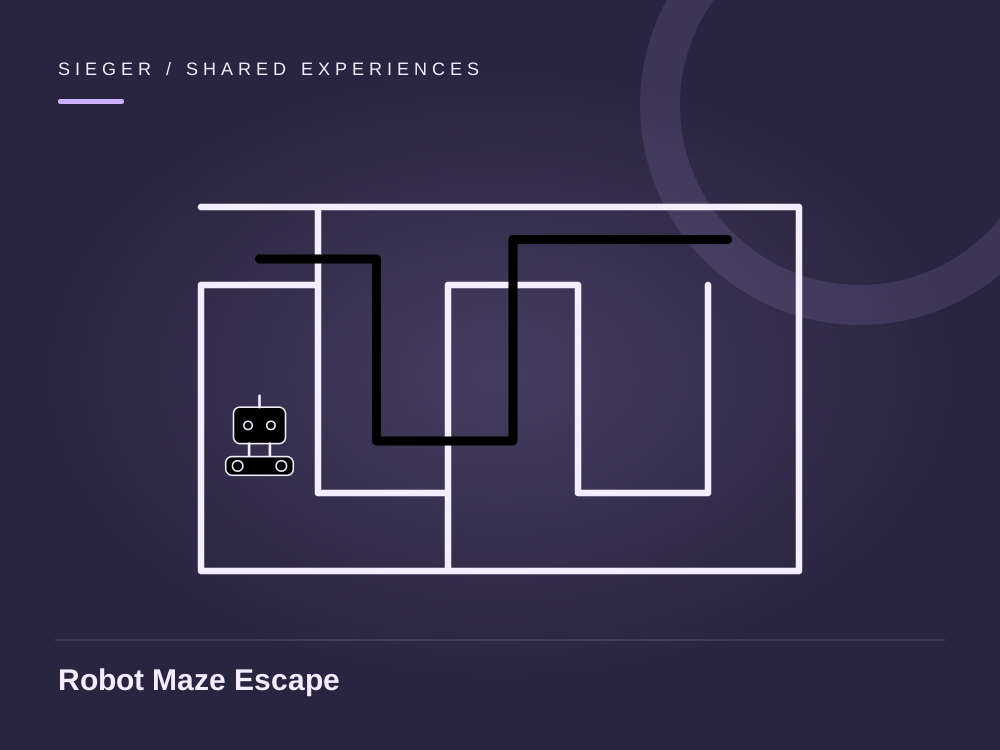
Teams must guide a robot through a maze using planning, programming logic and controlled iteration.
Explore the experience ↗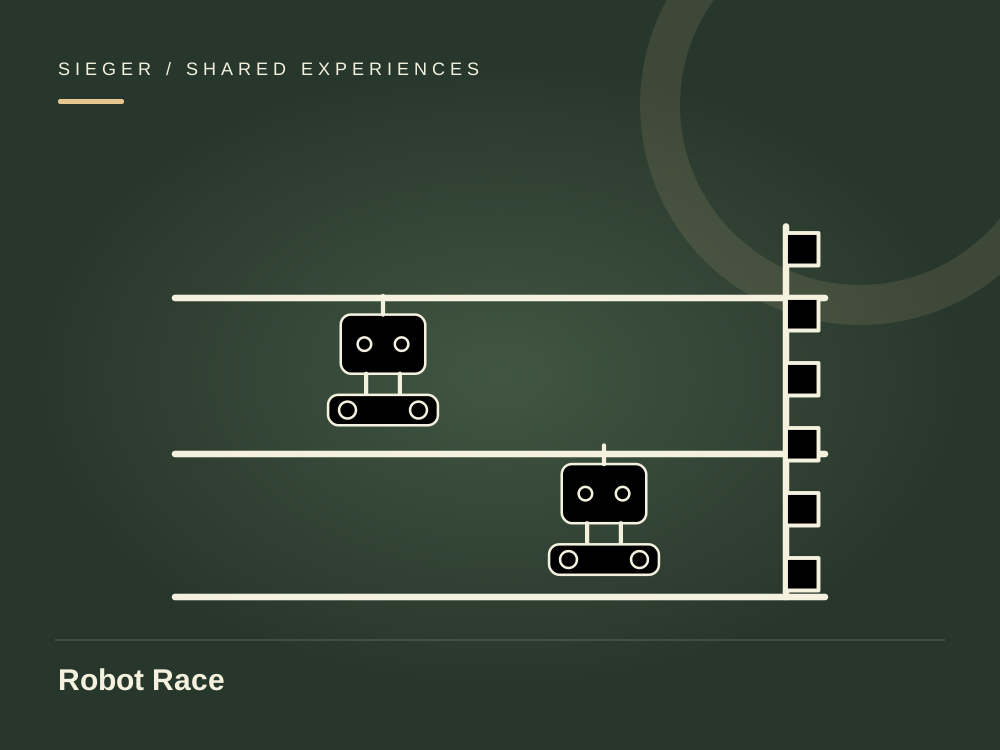
A competitive robotics experience where teams optimise a robot for speed, control and reliability.
Explore the experience ↗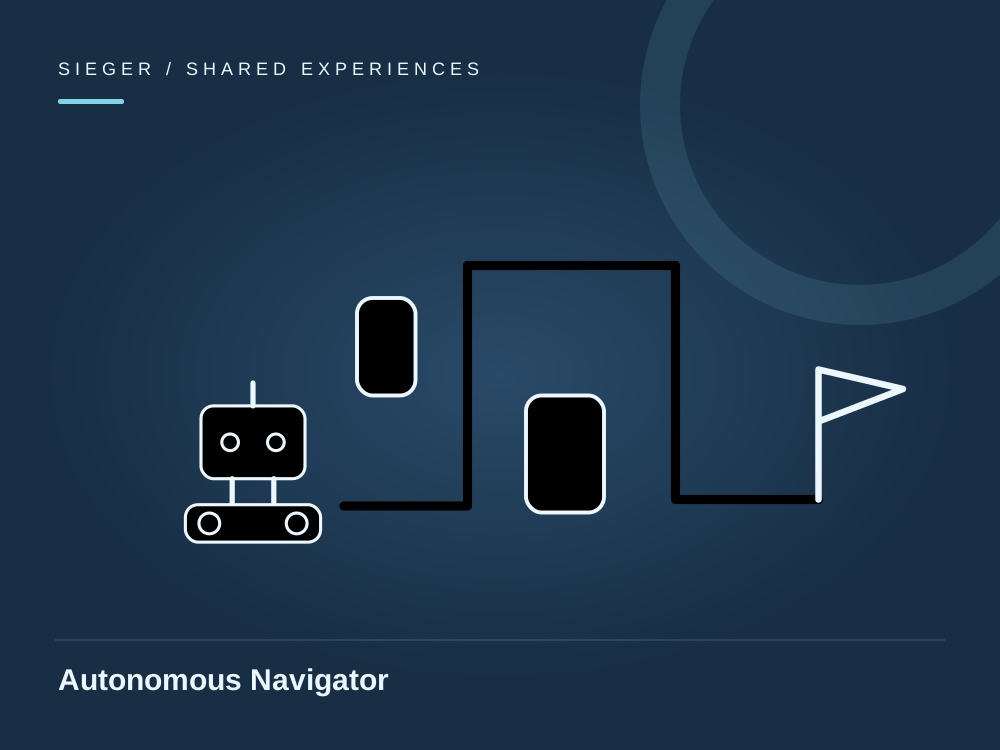
An advanced robotics challenge where teams design navigation logic that allows a robot to complete a route with limited human intervention.
Explore the experience ↗Tell us what you have in mind. We will help you explore a programme that fits your people and your occasion.
Still finalising the details? Share what you know.
Every team is different. Share your people, purpose and preferred setting, and we’ll translate your brief into an experience designed to connect, engage and create lasting impact.
Share your brief and preferred contact details.
Choose an experience that connects your people, your purpose and the possibilities of technology.