
Complete the human baseline
Complete the first task without AI and keep a record of the approach.
Think. Prompt. Compare.
A structured comparison of human-only and AI-assisted approaches across reasoning, creativity, analysis and decision tasks.
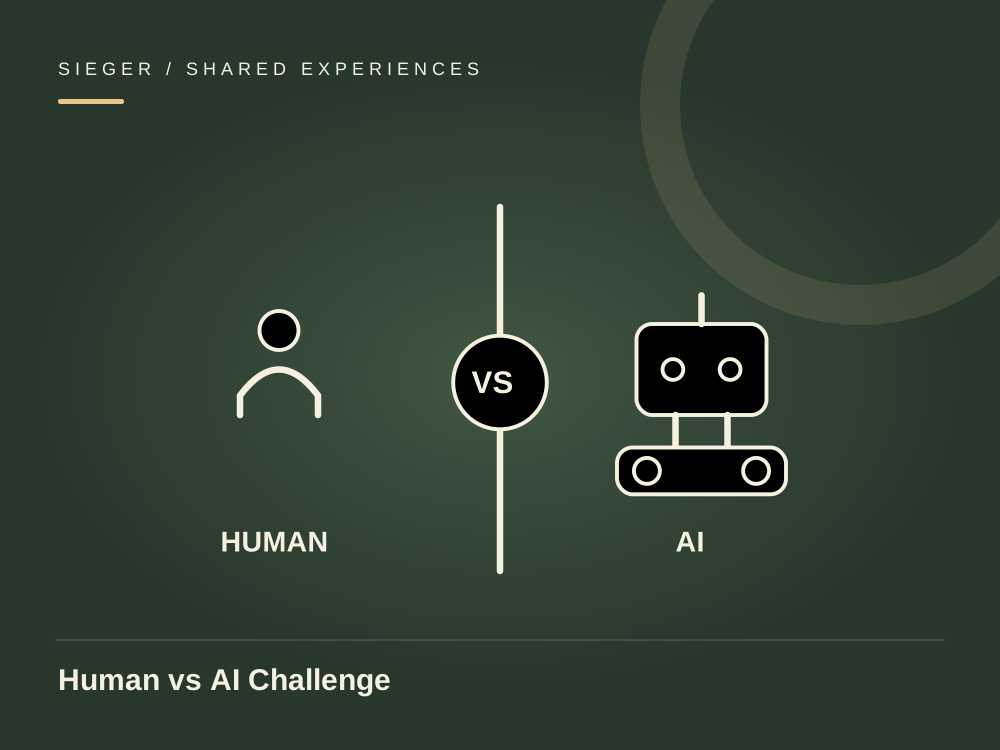
Teams complete a set of tasks using defined human-only and AI-assisted rounds. The goal is to understand where AI helps, where humans add value and how the two can work together.
Agree the mission rules and success criteria during the briefing, then let your team choose its approach.
A practical progression from the first decision to the final demonstration.
Complete the first task without AI and keep a record of the approach.
Attempt an equivalent task with the approved AI tool and the same evaluation criteria.
Compare usefulness, accuracy and effort rather than relying on first impressions.
Identify where human context improved the answer and where AI accelerated the work.
Propose a workflow with clear checkpoints for review and responsibility.
Evaluate the usefulness of an answer beyond its confident presentation.
Change the working approach when the comparison reveals a better option.
Recognise both the assistance and limitations of AI on a defined task.
Create human review points in the proposed combined workflow.
Instead of treating AI as simply “good” or “bad,” the experience helps teams examine where human judgement and AI capability complement one another.
Plan Human vs AI Challenge around your participants, the available time and the decisions you want them to practise.
Group sizes and timings are planning guides. Equipment, technical depth and venue suitability are confirmed in the proposal.
Planning details for Human vs AI Challenge. Bring any additional requirements into your conversation with Sieger.
The design compares task performance to reveal complementary strengths rather than declaring a universal winner.
Yes. Writing, analysis, ideation, classification and summarisation tasks can be selected for the audience.
Yes. Difficulty, narrative, scoring, team size, duration, venue layout and the workplace behaviour being explored can all be customised.
Yes. The experience can be combined with electronics, drones, robotics, STEM, software, AI and mechanical challenges to create a larger technology challenge journey.
The current planning format is 20–120 participants, organised into teams of 4–6. Confirm the final group size with Sieger so equipment, facilitator coverage and team rotations can be planned.
The indicative activity duration is 60–75 min. Briefing, practice, team presentations and debrief requirements can affect the final agenda; agree the complete session timing during planning.
The proposed kit includes Task cards, Approved AI tool, Evaluation rubric, Comparison sheet, and Scoring framework. Confirm the final equipment list, participant devices and venue requirements with the programme team.
The existing format is designed with leadership teams, ai transformation programs, knowledge workers, cross-functional teams in mind. Share participants’ experience levels so the technical depth and facilitation can be matched to the group.
The facilitator can use the agreed challenge rules, team decisions and observed results to guide the debrief. The discussion connects judgement, adaptability, ai literacy to situations your team encounters at work.
Send your preferred date, location, participant count and learning objective through the enquiry form or call +91 98400 97567. Sieger can discuss the suitable format, equipment, venue needs and proposal.
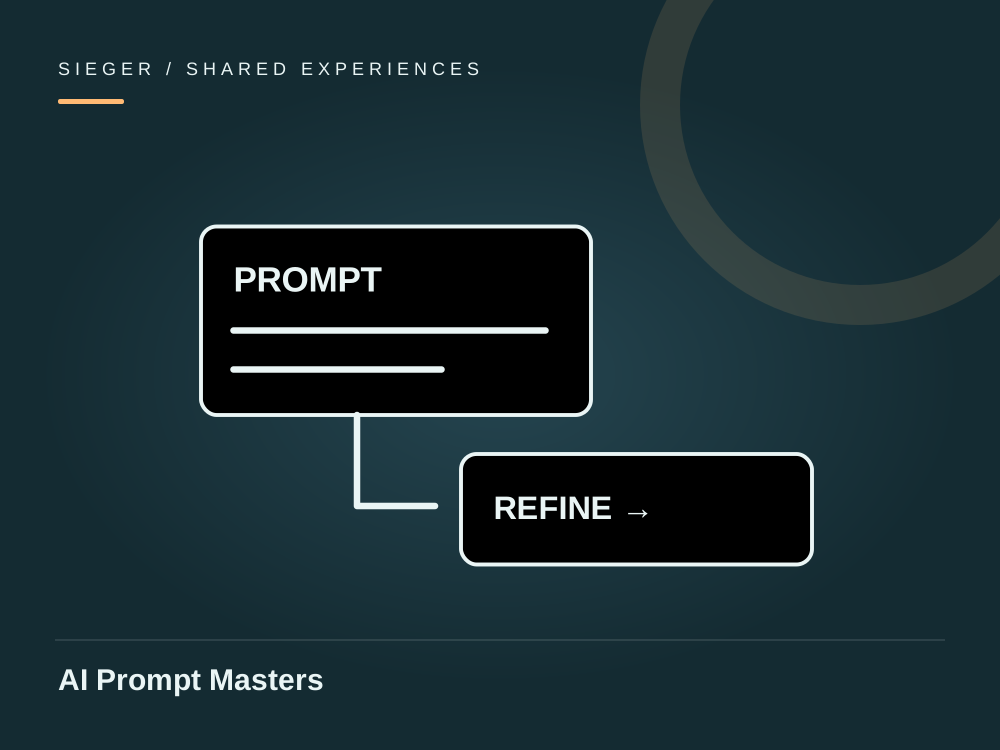
A practical generative-AI challenge where teams compete to design prompts that produce useful, accurate and controllable outputs.
Explore the experience ↗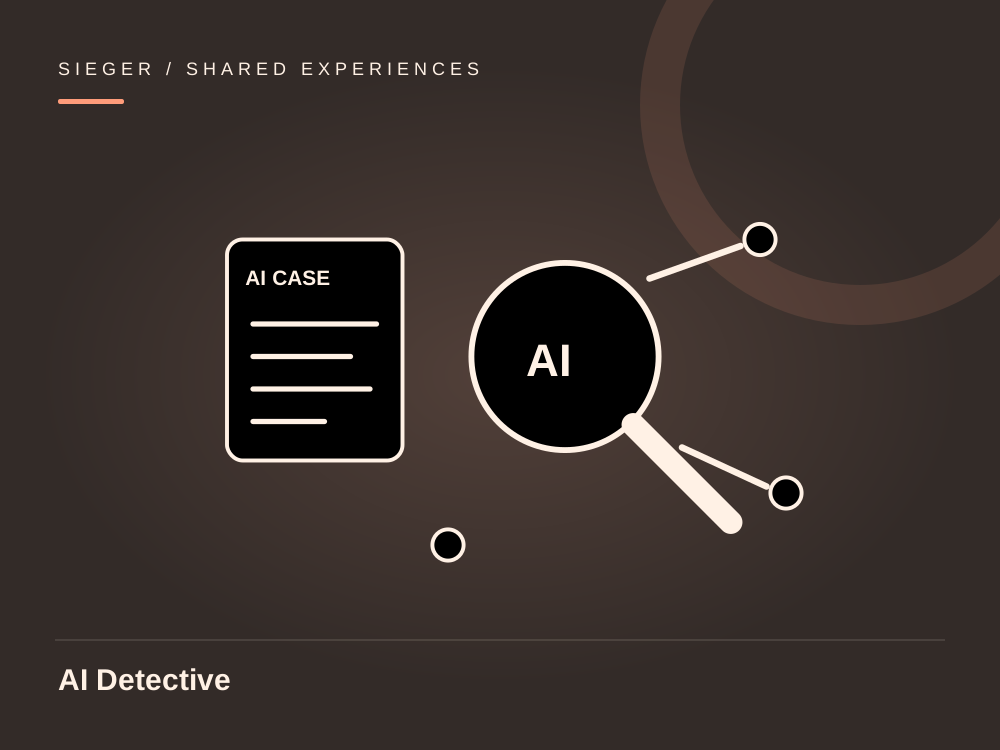
An AI-assisted investigation where teams analyse fictional evidence, challenge AI outputs and identify the most defensible conclusion.
Explore the experience ↗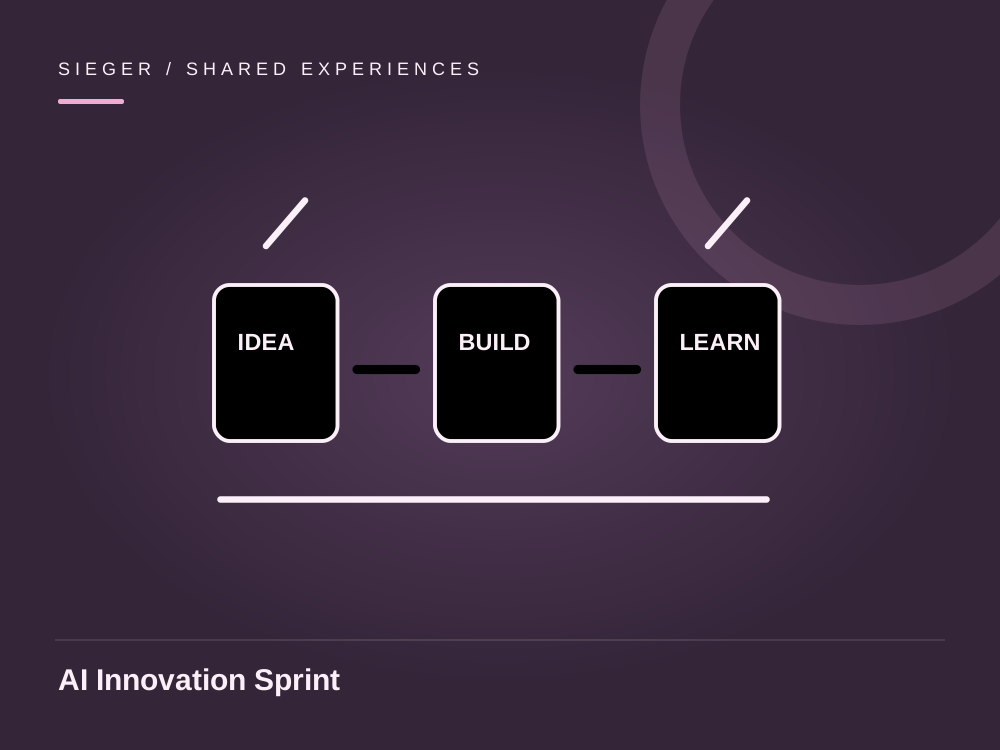
A business innovation sprint where teams use generative AI to explore ideas, develop a solution and pitch a practical concept.
Explore the experience ↗Tell us what you have in mind. We will help you explore a programme that fits your people and your occasion.
Still finalising the details? Share what you know.
Every team is different. Share your people, purpose and preferred setting, and we’ll translate your brief into an experience designed to connect, engage and create lasting impact.
Share your brief and preferred contact details.
Choose an experience that connects your people, your purpose and the possibilities of technology.