
Review the incident report
Read the reported failure and establish what the system should have done.
Find the Fault. Fix the System.
A realistic debugging simulation where teams investigate a failing digital product, identify root causes and verify the fix.
The system appears to work—but critical scenarios are failing. Teams receive bug reports, logs, user symptoms and test cases and must determine what is actually broken.
Agree the mission rules and success criteria during the briefing, then let your team choose its approach.
A practical progression from the first decision to the final demonstration.
Read the reported failure and establish what the system should have done.
Separate repeated symptoms from isolated incidents and rank possible causes.
Trace the evidence through the supplied logs, rules or code snippets.
Use a focused test to distinguish the suspected fault from alternative explanations.
Demonstrate the repair and check that previously working scenarios still behave correctly.
Distinguish the underlying fault from its visible symptoms.
Use logs and test cases to choose between possible causes.
Check the repair against both failing and previously working scenarios.
Give the team a clear account of the incident, diagnosis and fix.
Debugging is a workplace behaviour, not just a technical skill: teams must ask better questions before making changes.
Plan Debug the System around your participants, the available time and the decisions you want them to practise.
Group sizes and timings are planning guides. Equipment, technical depth and venue suitability are confirmed in the proposal.
Planning details for Debug the System. Bring any additional requirements into your conversation with Sieger.
Yes. The challenge can emphasise incident analysis and logic rather than complex code.
No. The experience should use a controlled sandbox with fictional data.
Yes. Difficulty, narrative, scoring, team size, duration, venue layout and the workplace behaviour being explored can all be customised.
Yes. The experience can be combined with electronics, drones, robotics, STEM, software, AI and mechanical challenges to create a larger technology challenge journey.
The current planning format is 20–100 participants, organised into teams of 4–6. Confirm the final group size with Sieger so equipment, facilitator coverage and team rotations can be planned.
The indicative activity duration is 60 min. Briefing, practice, team presentations and debrief requirements can affect the final agenda; agree the complete session timing during planning.
The proposed kit includes Local web app / code sandbox, Bug tickets, Logs and test cases, Validator, and Answer key. Confirm the final equipment list, participant devices and venue requirements with the programme team.
The existing format is designed with software teams, product teams, operations teams, cross-functional digital teams in mind. Share participants’ experience levels so the technical depth and facilitation can be matched to the group.
The facilitator can use the agreed challenge rules, team decisions and observed results to guide the debrief. The discussion connects root-cause analysis, evidence-based decisions, quality assurance to situations your team encounters at work.
Send your preferred date, location, participant count and learning objective through the enquiry form or call +91 98400 97567. Sieger can discuss the suitable format, equipment, venue needs and proposal.
A collaborative coding and logic mission where teams solve interconnected digital puzzles to unlock the final system.
Explore the experience ↗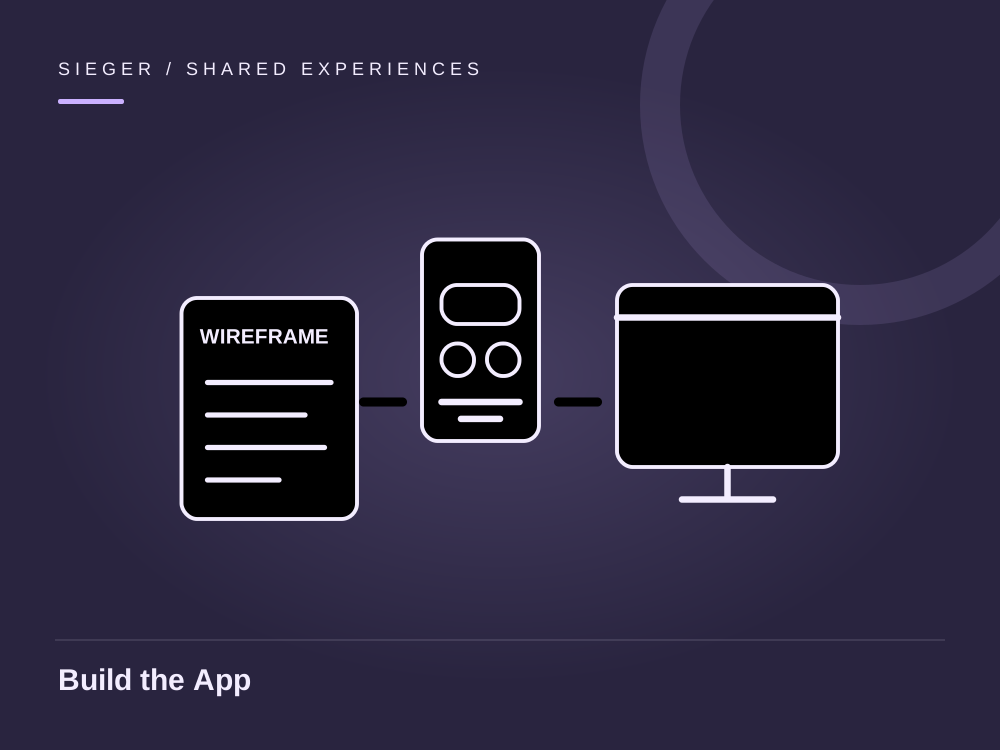
A rapid product challenge where teams turn a user problem into a simple app concept, prototype and pitch.
Explore the experience ↗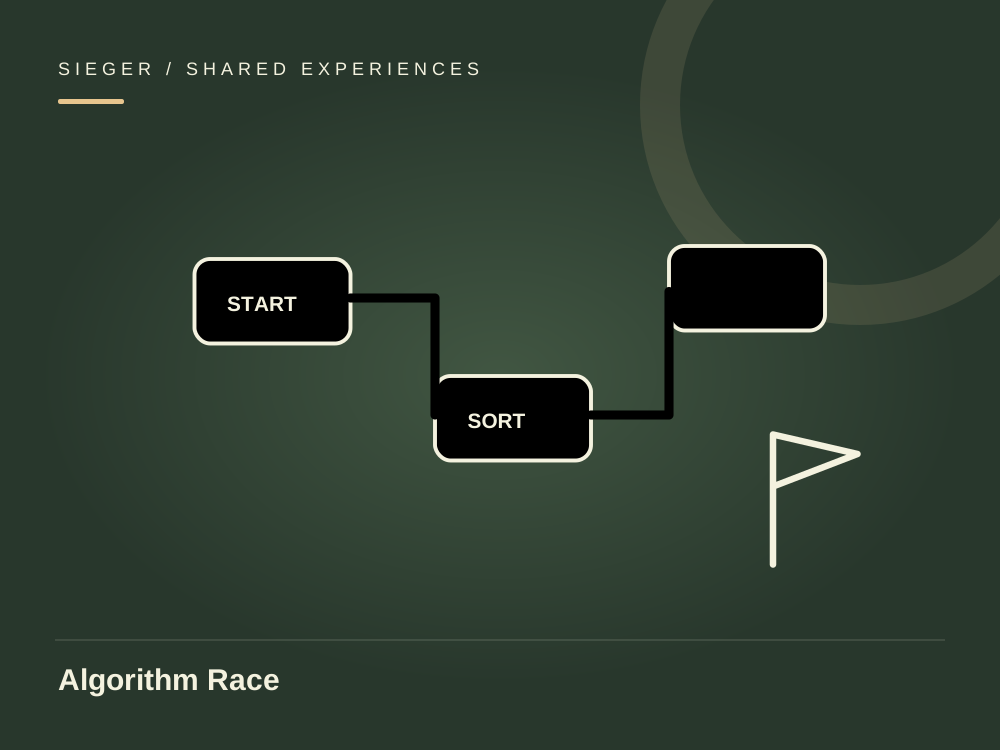
A timed algorithm challenge where teams compare solution approaches and optimise for accuracy, speed and efficiency.
Explore the experience ↗Tell us what you have in mind. We will help you explore a programme that fits your people and your occasion.
Still finalising the details? Share what you know.
Every team is different. Share your people, purpose and preferred setting, and we’ll translate your brief into an experience designed to connect, engage and create lasting impact.
Share your brief and preferred contact details.
Choose an experience that connects your people, your purpose and the possibilities of technology.