
Understand the system map
Identify the puzzle layers and how each answer feeds the next stage.
Crack the Logic. Unlock the System.
A collaborative coding and logic mission where teams solve interconnected digital puzzles to unlock the final system.
Teams receive a sequence of digital puzzles. Each solved layer reveals information needed for the next, creating a dependency chain that rewards systematic thinking.
Agree the mission rules and success criteria during the briefing, then let your team choose its approach.
A practical progression from the first decision to the final demonstration.
Identify the puzzle layers and how each answer feeds the next stage.
Allocate independent clues while keeping a shared record of progress.
Work through the logic and document assumptions alongside proposed answers.
Cross-check each result before passing it to the next puzzle layer.
Combine the validated outputs to reveal and justify the final code.
Build a solution from clues and explicit relationships.
Divide independent puzzle layers without losing the overall sequence.
Make intermediate answers available to everyone who depends on them.
Validate each output before using it in the next layer.
The experience reveals how small data errors can cascade through a digital system—and why teams need shared standards for checking work.
Plan Code Breakers around your participants, the available time and the decisions you want them to practise.
Group sizes and timings are planning guides. Equipment, technical depth and venue suitability are confirmed in the proposal.
Planning details for Code Breakers. Bring any additional requirements into your conversation with Sieger.
The challenge can range from logic-only to beginner coding depending on the audience.
A local/offline version can be prepared for supported formats.
Yes. Difficulty, narrative, scoring, team size, duration, venue layout and the workplace behaviour being explored can all be customised.
Yes. The experience can be combined with electronics, drones, robotics, STEM, software, AI and mechanical challenges to create a larger technology challenge journey.
The current planning format is 20–120 participants, organised into teams of 4–6. Confirm the final group size with Sieger so equipment, facilitator coverage and team rotations can be planned.
The indicative activity duration is 60–75 min. Briefing, practice, team presentations and debrief requirements can affect the final agenda; agree the complete session timing during planning.
The proposed kit includes Browser-based puzzle platform, QR / access cards, Puzzle set, Validation engine, and Facilitator answer key. Confirm the final equipment list, participant devices and venue requirements with the programme team.
The existing format is designed with technology teams, analytical teams, graduate groups, young leaders in mind. Share participants’ experience levels so the technical depth and facilitation can be matched to the group.
The facilitator can use the agreed challenge rules, team decisions and observed results to guide the debrief. The discussion connects logical reasoning, parallel work, information sharing to situations your team encounters at work.
Send your preferred date, location, participant count and learning objective through the enquiry form or call +91 98400 97567. Sieger can discuss the suitable format, equipment, venue needs and proposal.
A realistic debugging simulation where teams investigate a failing digital product, identify root causes and verify the fix.
Explore the experience ↗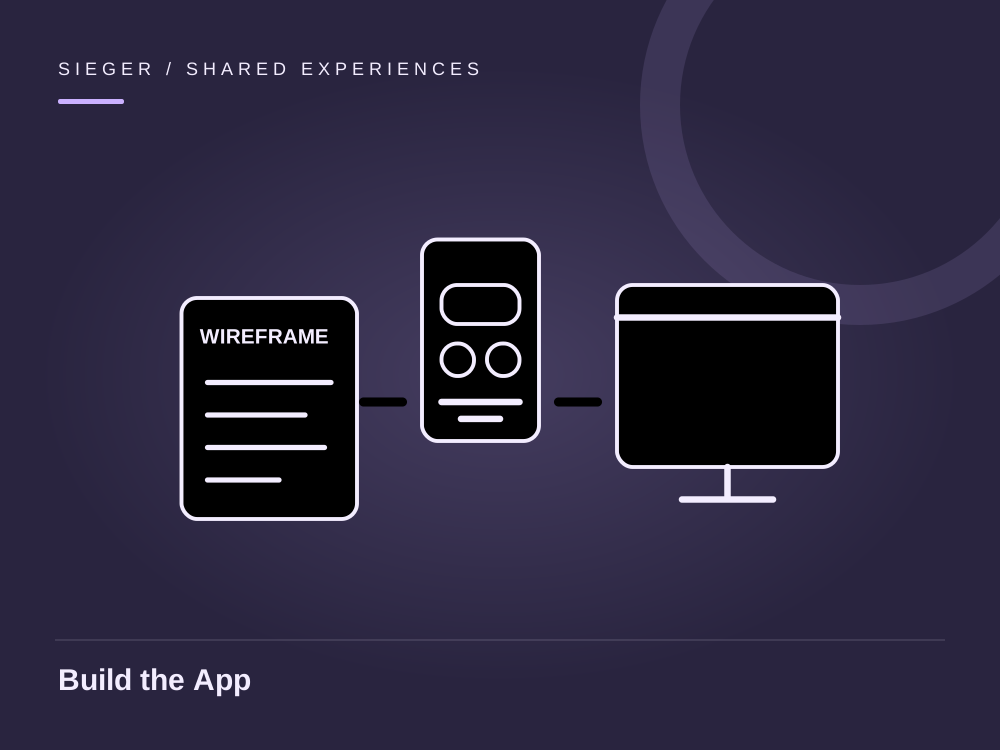
A rapid product challenge where teams turn a user problem into a simple app concept, prototype and pitch.
Explore the experience ↗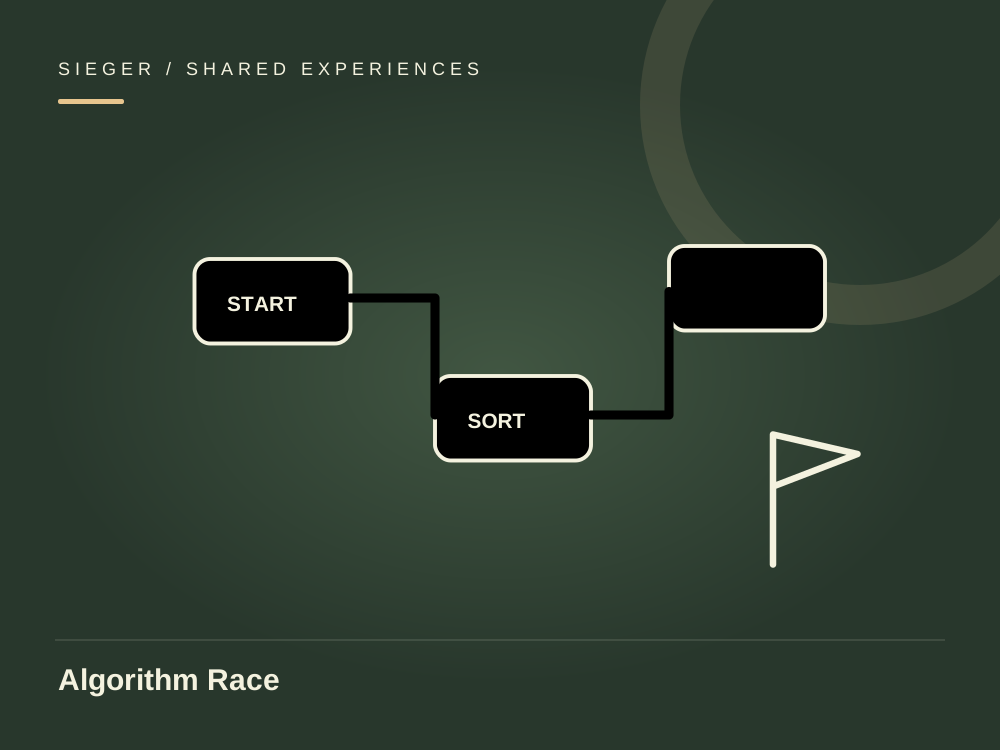
A timed algorithm challenge where teams compare solution approaches and optimise for accuracy, speed and efficiency.
Explore the experience ↗Tell us what you have in mind. We will help you explore a programme that fits your people and your occasion.
Still finalising the details? Share what you know.
Every team is different. Share your people, purpose and preferred setting, and we’ll translate your brief into an experience designed to connect, engage and create lasting impact.
Share your brief and preferred contact details.
Choose an experience that connects your people, your purpose and the possibilities of technology.