
Understand the user problem
Identify the intended user and the task they need to complete.
Problem → Product → Prototype.
A rapid product challenge where teams turn a user problem into a simple app concept, prototype and pitch.
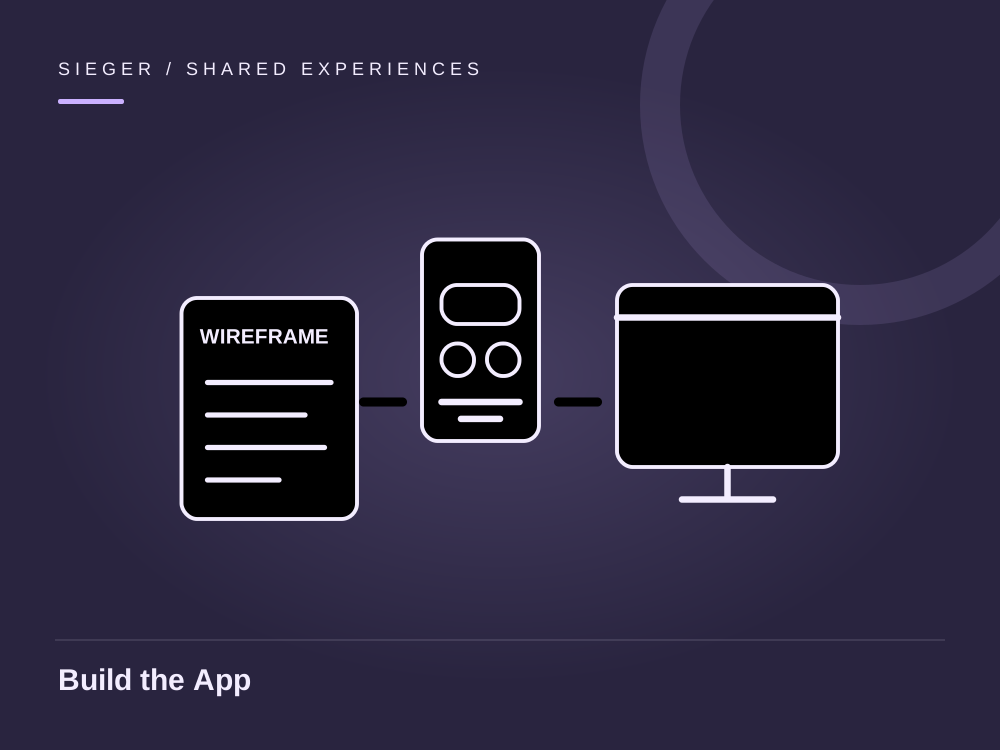
Teams receive a business or user problem. They must define the user, prioritise the core need, create a simple app prototype and demonstrate why the solution matters.
Agree the mission rules and success criteria during the briefing, then let your team choose its approach.
A practical progression from the first decision to the final demonstration.
Identify the intended user and the task they need to complete.
Choose the essential feature and set aside ideas that do not serve it.
Map the screens and decisions needed to reach a useful result.
Create the agreed prototype using the selected tools and level of fidelity.
Ask someone to attempt the task, capture the friction and pitch the revised concept.
Define success from the intended user’s point of view.
Choose the essential function before expanding the feature set.
Connect the user journey to a demonstrable prototype.
Explain the problem, proposed solution and feedback in a short pitch.
The experience shows why great products are often created by deciding what not to build.
Plan Build the App around your participants, the available time and the decisions you want them to practise.
Group sizes and timings are planning guides. Equipment, technical depth and venue suitability are confirmed in the proposal.
Planning details for Build the App. Bring any additional requirements into your conversation with Sieger.
No. The emphasis is on problem framing, user experience and rapid prototyping.
Yes, provided confidential information is not placed into public AI or external tools.
Yes. Difficulty, narrative, scoring, team size, duration, venue layout and the workplace behaviour being explored can all be customised.
Yes. The experience can be combined with electronics, drones, robotics, STEM, software, AI and mechanical challenges to create a larger technology challenge journey.
The current planning format is 20–80 participants, organised into teams of 5–6. Confirm the final group size with Sieger so equipment, facilitator coverage and team rotations can be planned.
The indicative activity duration is 90 min. Briefing, practice, team presentations and debrief requirements can affect the final agenda; agree the complete session timing during planning.
The proposed kit includes Prototype tool, User brief, User-test scripts, Feature cards, and Pitch template. Confirm the final equipment list, participant devices and venue requirements with the programme team.
The existing format is designed with product teams, innovation teams, business teams, leadership programs in mind. Share participants’ experience levels so the technical depth and facilitation can be matched to the group.
The facilitator can use the agreed challenge rules, team decisions and observed results to guide the debrief. The discussion connects customer focus, prioritisation, product thinking to situations your team encounters at work.
Send your preferred date, location, participant count and learning objective through the enquiry form or call +91 98400 97567. Sieger can discuss the suitable format, equipment, venue needs and proposal.
A collaborative coding and logic mission where teams solve interconnected digital puzzles to unlock the final system.
Explore the experience ↗
A realistic debugging simulation where teams investigate a failing digital product, identify root causes and verify the fix.
Explore the experience ↗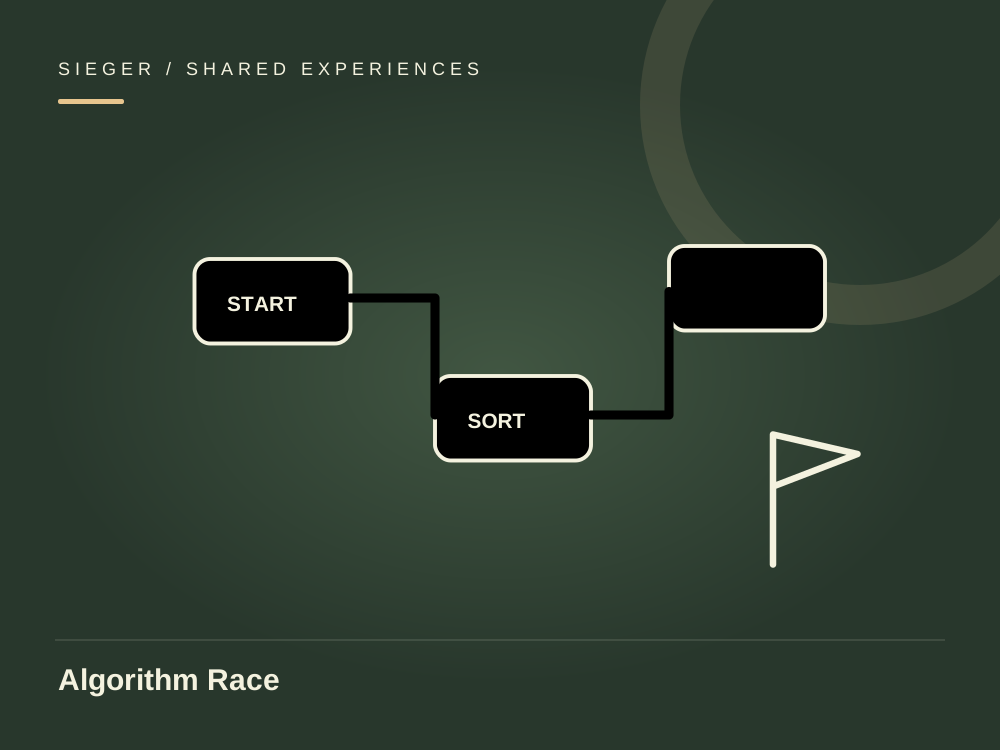
A timed algorithm challenge where teams compare solution approaches and optimise for accuracy, speed and efficiency.
Explore the experience ↗Tell us what you have in mind. We will help you explore a programme that fits your people and your occasion.
Still finalising the details? Share what you know.
Every team is different. Share your people, purpose and preferred setting, and we’ll translate your brief into an experience designed to connect, engage and create lasting impact.
Share your brief and preferred contact details.
Choose an experience that connects your people, your purpose and the possibilities of technology.