Give clear directions
For giving and following directions without relying on sight, use concise cues and confirm that the person taking part has understood them.
A trust-building team challenge shaped by communication without sight.
Blindfold team-building activities ask colleagues to listen closely, give clear directions and support one another. Sieger Group can tailor a facilitated format to your venue and group.
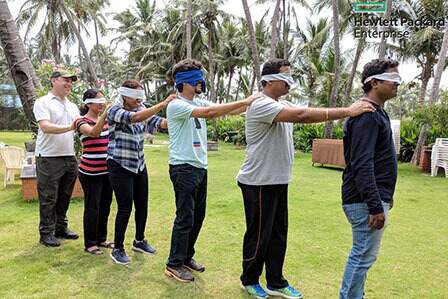
Games using blindfolds have been a part of team building activities for many years. Blindfold activities can impel team members into working together more closely and also make some team building activities more memorable.
Blind Leads: This is a great way to develop trust and communication, sometimes called Trust Walks. One person is blindfolded and their partner is sighted. The person takes the other for a walk by holding their hand or arm and talking to them as they go.
For giving and following directions without relying on sight, use concise cues and confirm that the person taking part has understood them.
Pause for a teammate's response instead of assuming that the instruction was clear.
Check readiness and let the group coordinate each move around the person doing the task.
Offer steady support while respecting each participant's choices and comfort level.
Let responsibility move between people so that more than one voice can guide the group.
Discuss which actions helped Blindfold feel more coordinated and inclusive.
The session centres on giving and following directions without relying on sight. The facilitator briefs the group, guides the activity and helps participants reflect on the choices they made together.
Introduce the selected communication challenge and explain boundaries and participation options.
Agree how directions will be described when some colleagues cannot use visual information.
Work through the chosen task while checking whether instructions are understood.
Invite guides and blindfolded participants to describe what helped or hindered their understanding.
Explore photographs to picture the experience before planning your team event.

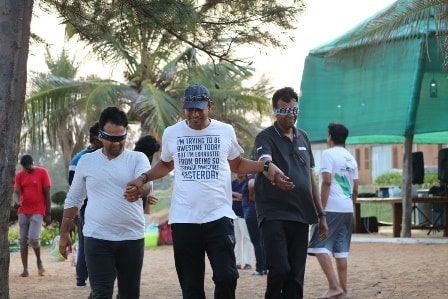
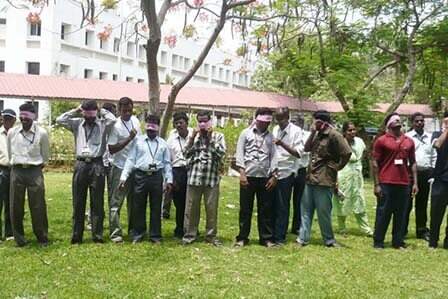
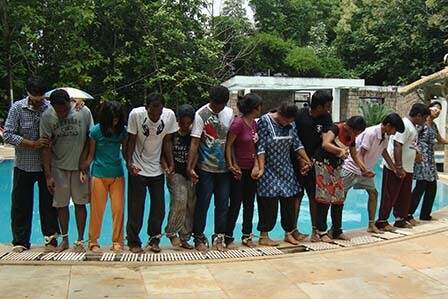
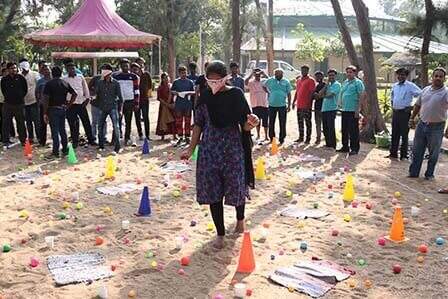
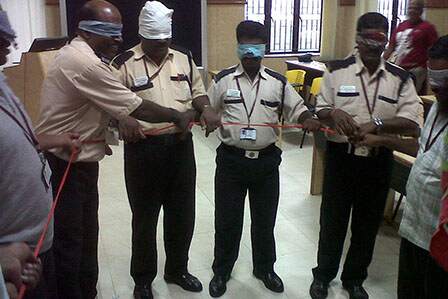


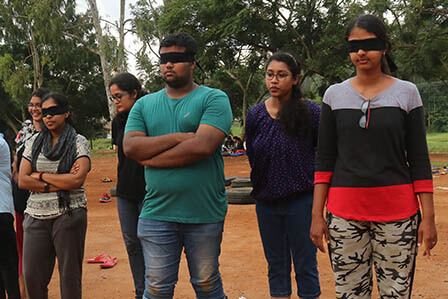
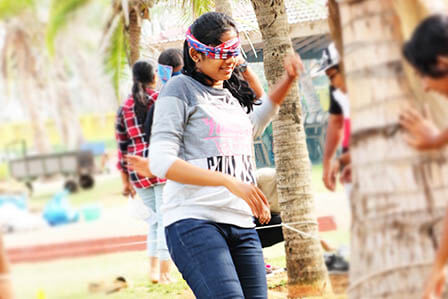
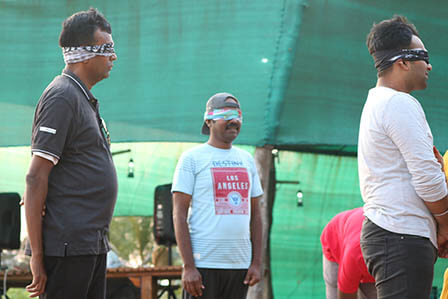
The Blindfold task makes support observable through a clear cue, a careful check-in and the willingness to listen before taking the next step. The facilitator can help the group reflect on how those choices affected participation.
Carry the conversation into everyday collaboration by asking how colleagues give direction, confirm understanding and respond when someone signals that they need help or a different pace.
Which directions were useful without visual information?
How did guides confirm understanding before the next action?
What helped the group avoid several people speaking at once?
How did changing roles affect appreciation of the listener’s perspective?
Discuss how precise language can replace assumptions about what a colleague can see.
Explore the value of confirmation before a team acts on an instruction.
The Blindfold team-building experience centres on giving and following directions without relying on sight. Sieger Group can tailor the facilitation, session flow and venue plan to your group size, event format and objectives.
A sighted partner guides a blindfolded teammate along an agreed route. Clear descriptions and attentive listening help the pair coordinate.
Identify missing shapes through shared descriptions and logical reasoning. With visual information restricted, teammates combine what each person knows.
Follow a designated line in a facilitated blindfold challenge. Reflect on orientation, guidance and the information participants find useful.
Compare a collection of shapes to identify missing pieces. Organise descriptions and reason together without relying on sight.
A sighted director guides a blindfolded partner in a paper-ball game. Distinct instructions help each pair respond within the marked zone.
Find teammates making the same assigned sound. Distinguishing useful signals from surrounding noise is central to the task.
Retrieve objects quietly while a blindfolded listener locates the movement. The facilitator explains boundaries, turns and the listening role.
Build a tent with visual information restricted. Teammates describe parts and coordinate the assembly through spoken instructions.
Pass an object around the circle quietly while a central listener locates it. Careful handovers and attention to sounds shape the challenge.
Arrange a rope into a square while blindfolded. Teams agree roles and describe positions without visual confirmation.
Follow a guided route and attempt to retrace it. Explore remembering directions when familiar visual cues are unavailable.
Locate a teammate within a defined activity area in a guided blindfold search. The facilitator establishes boundaries and participation options.
A shepherd uses agreed sound cues to guide blindfolded teammates towards a pen. Establishing a shared meaning for each signal is central to the task.
Guide teammates through a marked maze without sight. Practise recognisable instructions when several guides are speaking nearby.
Follow a rope route as a connected group with restricted sight. Messages along the line help teammates respond to changes in direction or pace.
Guide a blindfolded teammate through a marked obstacle area. Use precise directions and check that instructions are understood.
A sighted partner guides a blindfolded participant towards them using verbal directions. Listening and confirmation help the pair coordinate.
Combine spoken instructions and silent signals across different roles. Connect information between colleagues who cannot all communicate in the same way.
A paired movement exercise explores guidance when one participant cannot see. The instructor confirms the route, suitable pace and participation requirements.
Form a requested polygon with visual information restricted. Teams coordinate the shape through descriptions, reasoning and agreed roles.
Explore the texture of a tree with a partner's guidance, then try to recognise it afterwards. Notice details through senses other than sight.
Find your assigned animal group by listening for matching sounds. The facilitator defines the area and explains how participants regroup.
Describe a line drawing to a teammate who cannot see the reference. Compare the finished picture with the original to discuss clarity and assumptions.
Describe an object without naming it so teammates can identify it. Use precise language about texture, shape and distinguishing features.
Recognise colleagues from messages spoken in disguised voices. This listening game draws attention to familiar vocal cues.
A blindfolded seeker locates group members within the agreed area. The facilitator manages boundaries and explains the rules.
Place a tail on a donkey picture while blindfolded. Take turns and compare placements in this familiar party-style game.
Build a tower from blocks with visual information restricted. Coordinate placement and describe how the structure is developing.
A sighted teammate guides a blindfolded partner in an egg-and-spoon relay. Balance clear directions with attention to the item being carried.
A specialist-led group-support exercise explores communication and readiness. The facilitator determines the format and explains participation choices.
A trust-wave activity asks the group to respond together as a participant passes through. Discuss the supervised format and individual requirements with the facilitator.
Sieger Group supports organisations with team-building experiences and facilitated programmes.
Answers to common planning questions about the activity, venue and team format.
Games using blindfolds have been a part of team building activities for many years. Blindfold activities can impel team members into working together more closely and also make some team building activities more memorable.
Blind Leads: This is a great way to develop trust and communication, sometimes called Trust Walks. One person is blindfolded and their partner is sighted. The person takes the other for a walk by holding their hand or arm and talking to them as they go. Participants can share information, listen actively and make their ideas clear during the shared task.
Previous experience requirements depend on the activity format. Share your participants’ experience level and any access needs when enquiring so Sieger Group can discuss a suitable plan.
Yes. Share the outcomes you want to support, such as communication, trust, creative problem-solving or coordination. Sieger Group can discuss how the Blindfold Team Building Activities format may fit your wider programme.
Venue requirements depend on the activity, equipment and event format. Tell Sieger Group where you plan to host the session so the team can confirm the practical setup.
That depends on the activity and the available setup. Share your preferred indoor or outdoor venue, along with any site constraints, and Sieger Group can advise on suitability.
The suitable group size depends on the format, venue and schedule. Include your expected headcount in the enquiry so Sieger Group can recommend an appropriate arrangement.
Session length can be planned around the activity format and your event schedule. Share the time available so Sieger Group can recommend a suitable plan.
Please share your preferred date, location or venue, expected group size, audience, event objectives and any practical requirements. This helps Sieger Group respond with relevant planning details.
Use the enquiry section on this page or the shared Get in Touch option. Tell us about your team, location, preferred date and goals; Sieger Group will follow up to discuss the activity and next steps.
Tell us what you want your team to practise through Blindfold Team Building Activities. Sieger Group can help plan a facilitated session around your group, venue and event goals.
Discuss a suitable session format, activity flow and level of challenge for your team.
Still finalising plans? Share what you know and we can start there.
Leave your details and a little about the session you have in mind.
Share your event brief for Blindfold Team Building Activities with Sieger Group and shape a session around your people and objectives.