Prepare deliberately
For Bar Bending, understand the format, participant suitability and venue requirements before the session.
Two people. One shared challenge. A new conversation about trust.
Turn a striking shared challenge into a conversation that matters at work. Sieger Group’s Bar Bending team building activity brings partner trust, focused communication and shared accountability into a facilitated corporate experience. Plan a session in Chennai or across India around your team, venue and learning objectives.

Also known as iron bar bending or rebar bending, this experiential team activity centres on partners taking part in a guided challenge with a steel bar. The session creates a vivid reference point for discussing how people communicate, prepare together and respond to an unfamiliar task.
For corporate teams and leadership groups, the value continues in the debrief: what helped partners feel aligned, how were concerns acknowledged, and what does shared responsibility look like in everyday work? Facilitation connects those observations to your programme objectives.
For Bar Bending, understand the format, participant suitability and venue requirements before the session.
Keep attention on the current instruction and follow the facilitator's guidance.
Give participants clear information so they can make an informed choice about their involvement.
Support a teammate with calm, respectful encouragement and room to decide.
Check that participants understand the briefing and know how to raise a concern.
Connect moments from the bar-bending challenge to the preparation, partner communication and encouragement that helped people feel supported.
Two partners, a steel bar and a shared challenge create a memorable starting point for exploring trust. The Bar Bending session moves from a clear briefing to partner communication, the facilitated experience and a focused team debrief.
Meet the Bar Bending format through a facilitator briefing and clarify participation choices before joining.
Discuss expectations with your partner and raise questions about the guided experience.
Partners who choose to participate take part under facilitator guidance while colleagues encourage respectfully.
Connect observations from the partner challenge to communication and shared accountability on a real project.
Explore photographs to picture the experience before planning your team event.


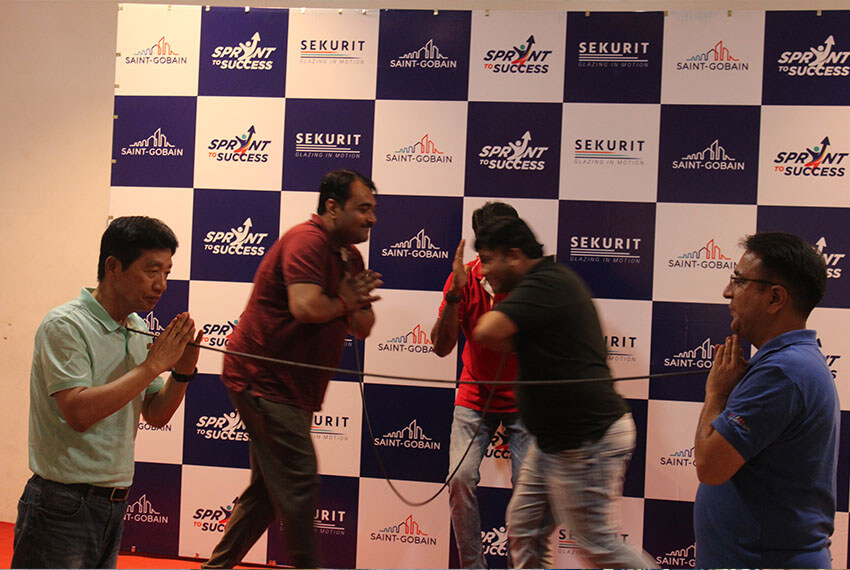
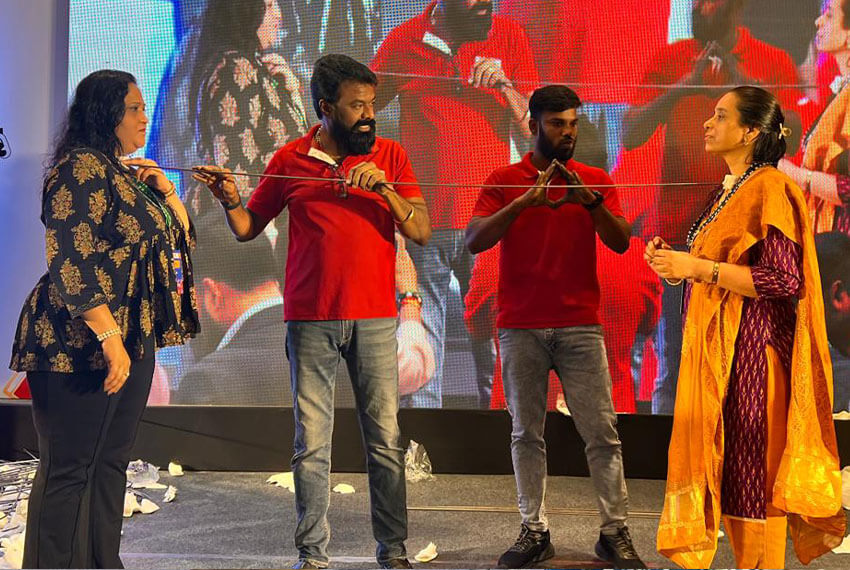

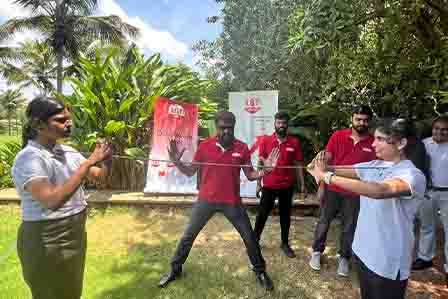

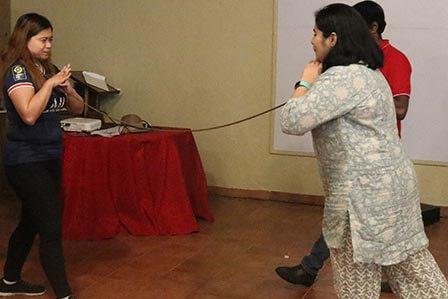

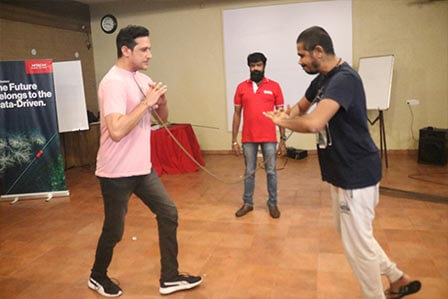

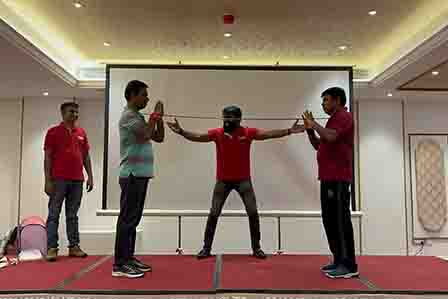

The facilitator-led Bar Bending format centres on taking part in a guided bar-bending experience and calls for considered preparation and clear communication. Reflection can focus on choice, attention, encouragement and the conditions that help participants feel supported throughout the experience.
For workplace learning, connect the discussion to how people approach unfamiliar responsibilities: make expectations clear, respect individual choices and recognize supportive actions without assuming that one activity proves a lasting change.
The Bar Bending experience brings a partnership into focus. Reflect on how participants acknowledged each other’s questions and established a shared understanding of the facilitated challenge.
Discuss what partners said or noticed before the guided steel-bar experience. Connect that exchange to checking understanding before starting a task that depends on another person.
Invite observers to describe the communication they noticed between partners during Bar Bending. Explore how listening and responding can make shared responsibility visible.
Use the Bar Bending debrief to identify an example of partner alignment. Discuss how a similar conversation could clarify responsibilities and expectations on a workplace project.
Trust in the Bar Bending partnership can be discussed through specific actions: acknowledging a concern, asking a question and paying attention to a partner. Identify which actions mattered to the participants.
A partner challenge does not remove individual choice. Reflect on how colleagues supported the Bar Bending experience while respecting each person’s decision about involvement.
Reflect on the difference between choosing to attempt the bar-bending experience and feeling pushed to participate. Discuss what helps people approach unfamiliar responsibilities with confidence.
Use a moment from the session to agree one practical team habit: ask before assuming, clarify a shared task or offer support in the way a colleague actually needs.
A memorable activity becomes more useful when teams can explain what they learned. Use the Bar Bending experience to explore partner alignment, personal assumptions and the everyday habits behind effective collaboration.
Partner alignment and shared accountability. The original Bar Bending concept puts partnership at the centre of the experience. Use the debrief to explore how colleagues establish a shared understanding, communicate uncertainty and take responsibility for their contribution. Connect the discussion to handovers, joint projects and work across departments.
Confidence and perceived limitations. An unfamiliar challenge can bring expectations and assumptions into focus. Invite participants to reflect on what they anticipated, what they experienced and which forms of support helped. This gives leadership development and outbound learning programmes a concrete starting point for discussing confidence and decision-making.
Experience, reflection and practical action. Follow the activity with a structured discussion and one achievable workplace commitment. Teams might agree to clarify roles before a shared task, check understanding at key moments or ask colleagues how they prefer to be supported. These actions give the learning a place in daily work.
Discuss a Bar Bending session for your corporate offsite, leadership programme or outbound training event. Sieger Group can review enquiries for Chennai, Bangalore, Hyderabad, Mumbai, Delhi NCR and Pune, with the final plan based on your venue, dates and participant requirements.
Start with your team objective. Tell us whether the programme is focused on partner trust, communication, shared accountability or bringing a new team together. This helps shape the briefing and reflection around a relevant workplace challenge.
Build the session into your event. Share your group size, proposed venue, available time and participant needs. Confirm the activity format, facilitation arrangements and practical requirements with Sieger Group before booking.
Explore complementary experiences. Compare Glass Walk team building and Fire Walk team experiences when discussing your wider programme. Each activity has its own requirements and should be considered against the group and event objectives.
Sieger Group supports organisations with team-building experiences and facilitated programmes.
Answers to common planning questions about the activity, venue and team format.
Bar Bending, also called iron bar bending or rebar bending, is a facilitated partner challenge involving a steel bar. Corporate groups use the experience and debrief to explore trust, communication and shared accountability.
The session offers a shared experience for discussing partner alignment, preparation and personal assumptions. A facilitated reflection connects observations to workplace situations such as handovers, joint decisions and collaboration across departments.
Suitability must be discussed before the event. Share participant needs and relevant requirements with Sieger Group, and confirm the format and participation options. Each person should be able to make an informed choice about taking part.
Contact Sieger Group about Bar Bending in Chennai, Bangalore, Hyderabad, Mumbai, Delhi NCR or Pune, or share another proposed location in India. Availability, venue suitability and event arrangements are confirmed during planning.
It can be discussed as part of a leadership development programme, corporate offsite or outbound training event. Share the learning objectives so the facilitation and debrief can focus on relevant themes, such as communication or shared accountability.
The indicative programme is two hours for groups of 20–500 or more. Confirm the final duration, participant flow and facilitation arrangements against your headcount, venue and event schedule.
Ask Sieger Group about including complementary experiences in a wider programme. Glass Walk and Fire Walk have distinct requirements; the event plan should consider suitability, time, venue and participant choice for each activity.
Share your city, preferred date, venue, expected group size, participant profile and team objectives. Include the time available and any participant requirements so Sieger Group can discuss a relevant programme and quotation.
Tell us what you want your team to practise through Bar Bending Team Building Activity. Sieger Group can help plan a facilitated session around your group, venue and event goals.
Discuss a suitable session format, activity flow and level of challenge for your team.
Still finalising plans? Share what you know and we can start there.
Leave your details and a little about the session you have in mind.
Share your event brief for Bar Bending Team Building Activity with Sieger Group and shape a session around your people and objectives.